
The reference layer for psychedelic medicine
Agarikon indexes 8,654 treatment and trial records — clinics, trial sites, registered studies and retreat centers — alongside 33,166 papers, 1,502 researchers, 1,532 state bills and 167 industry organizations. 6,964 of those four carry coordinates and sit on the map; the 1,631 registered studies, like the papers, are indexed and filterable but have no single location to plot. Across everything we index, 9,946 records are on the map. Rebuilt every day, each record linked to the public source it came from. It exists because this information was scattered across state registers, a federal trial database and several hundred operator websites, and nobody had put it in one place you could filter.
What it's for
Three groups get real use out of it. People looking for treatment, who need to know what's lawful and bookable where they live rather than what's promising in general. Researchers and journalists, who need counts they can cite and a way to see the field's actual shape. And operators, who mostly want to know what else exists in their state.
The design bet is that provenance beats polish. Every record carries a link back to its source, so you can check us in one click, and the index is rebuilt daily; the stamp in every page footer is the date those counts were computed, so you can tell exactly how fresh a number is.
The legal basis field
This is the piece that doesn't exist anywhere else. Where a center publishes one, we record the statute, license or exemption it says it works under: Oregon's ORS 475A, Colorado's numbered NMHC license, Jamaica's absence of psilocybin from the Dangerous Drugs Act, Peru's cultural-patrimony protection for ayahuasca. Where an operator publishes nothing specific but the jurisdiction's own position is clear, we record that instead and label it as such, because a country statute and an operator's own citation are different strengths of evidence. Where neither exists the record carries no basis line at all, only its legal-status class — 172 of 214 retreat records and 49 of 2,259 clinic records carry one today.
What it isn't
Not medical advice, not a booking service, and not an endorsement of anything listed. A record's presence means we found it in a public source, nothing more. Several centers in this index are, in our reading, operating in legally ambiguous territory, and they're listed precisely so you can see that rather than discover it later.
We take no payment from operators for inclusion, placement or removal. There is no premium listing.
About the founder
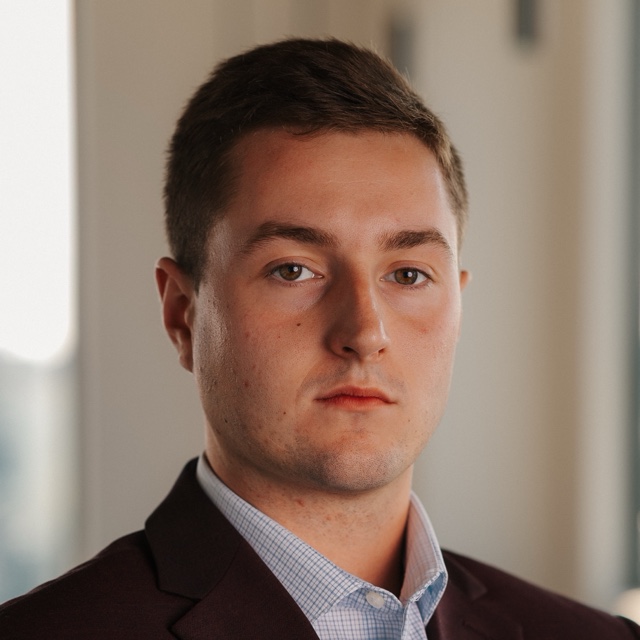
I’m the founder of Agarikon, and I build infrastructure for a living. Before that, I spent two years answering 911 calls as an EMT in Maryland and a year running ground operations for the state’s mobile COVID-19 vaccination program. Today, I work as a U.S. Army Reserve cyber operations specialist and infrastructure engineer in Seattle.
Those experiences shaped how I think about the next major shift in healthcare. I’ve seen firsthand how difficult it can be to connect people with effective mental-health care, and I believe we’re approaching a fundamental change in how those conditions are treated. Psychedelic medicine has the potential to be one of the most important parts of that transformation.
But new medical fields can’t mature on promising science alone. They need reliable infrastructure, transparent data, and a shared understanding of what has actually been studied.
That’s why I built Agarikon.
My goal is to help build the data infrastructure for the coming mental-health revolution: a centralized, continuously updated corpus of information on psychedelic therapies, their research, development, clinical trials, companies, compounds, and the broader ecosystem around them.
Agarikon rebuilds itself daily and traces every claim back to its source. The idea is simple: as this field develops, there should be a place where the entire body of knowledge can be organized, connected, and understood.
— Erich Mayne
Start here
Is psilocybin legal where I live is the most-used page. What you can book now covers availability by medicine and state. Recruiting trials is the free route. And the methodology explains how all of it is built, including where it's weakest.